Tower Safety Rigging Lab
Barber Lift Simulator
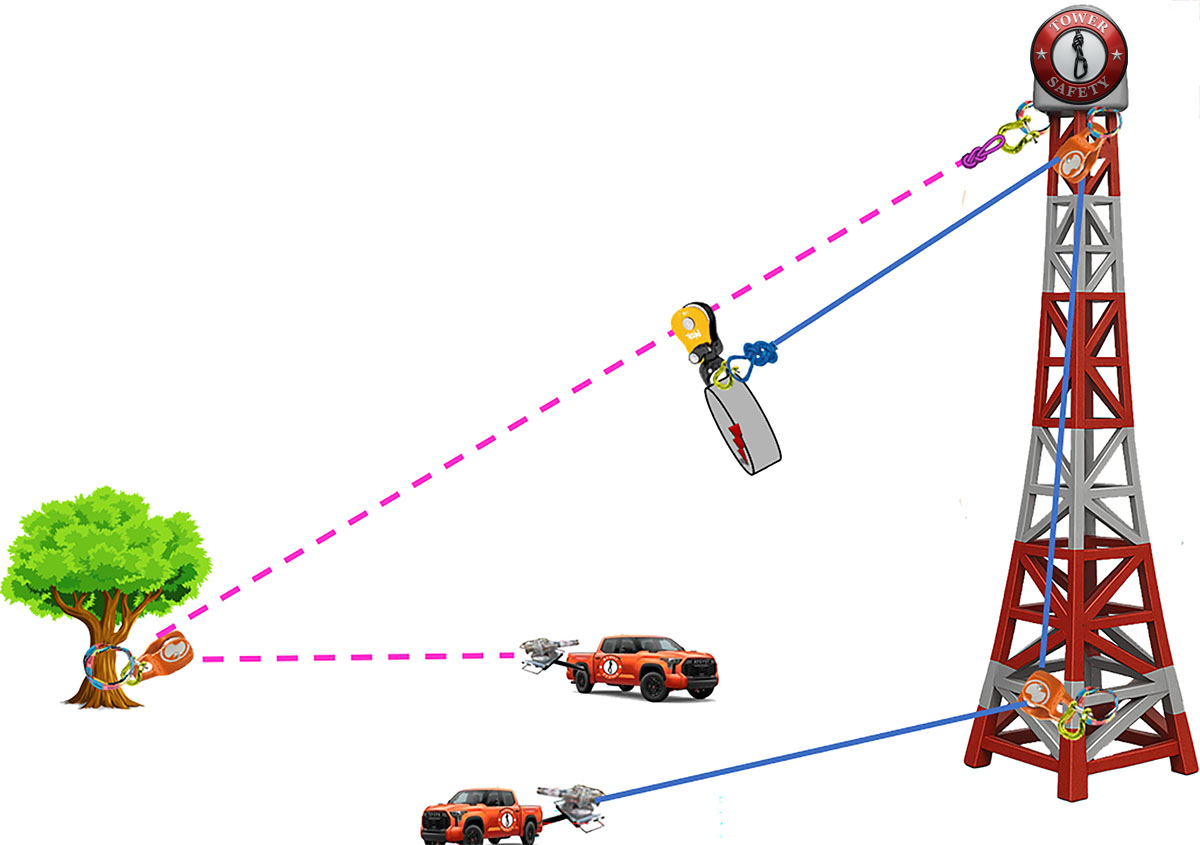
Two-rope Barber Lift: static line + load line with travelling pulley, live force warnings, vector breakdown, and ANSI wind teaching stop. Updated to match the Tower Safety Top Pulley simulator input template.
Live Teaching Warning
Safe / normal training range. Continue to monitor force buildup, load control, and wind conditions.
ANSI/TIA-10.48 Warning
Straight Tag Lift: Straight tag lifts for lift systems attached to the structure with vertical load position angles exceeding 10 degrees, and/or horizontal tag angles exceeding 70 degrees regardless of the gross load shall be treated as requiring additional review.
11.5.4 Wind Limitations: The nominal wind speed considered for standard load chart values is 30 mph at the elevation of the gin pole. This does not mean lifts can be, or shall be, conducted with wind speeds up to 30 mph. Other factors including specific site conditions, load control parameters, and the types of objects being lifted shall be considered when making this evaluation.
Above 30 mph: Lifts in nominal wind speeds above 30 mph shall be considered special engineered lifts in accordance with ANSI/TIA-322-A with applicable evaluation and special lift parameter conditions applied.